


Nyheder
Ny GONOW Move Freely Live Fully
Ny GONOW Move Freely Live Fully
Look at who is actually behind the wheel of a camping van today, and a clear pattern emerges: a large share of travelers are going out alone or as a pair. They are remote workers chasing a change of scenery, couples planning long weekends, and independent travelers who value freedom over square footage. For these users, a vehicle designed to sleep five or six people is more than they need. When the need itself is small, a compact vehicle is not a compromise. It is simply a more accurate answer, and that is where Class B camping vans stand out.
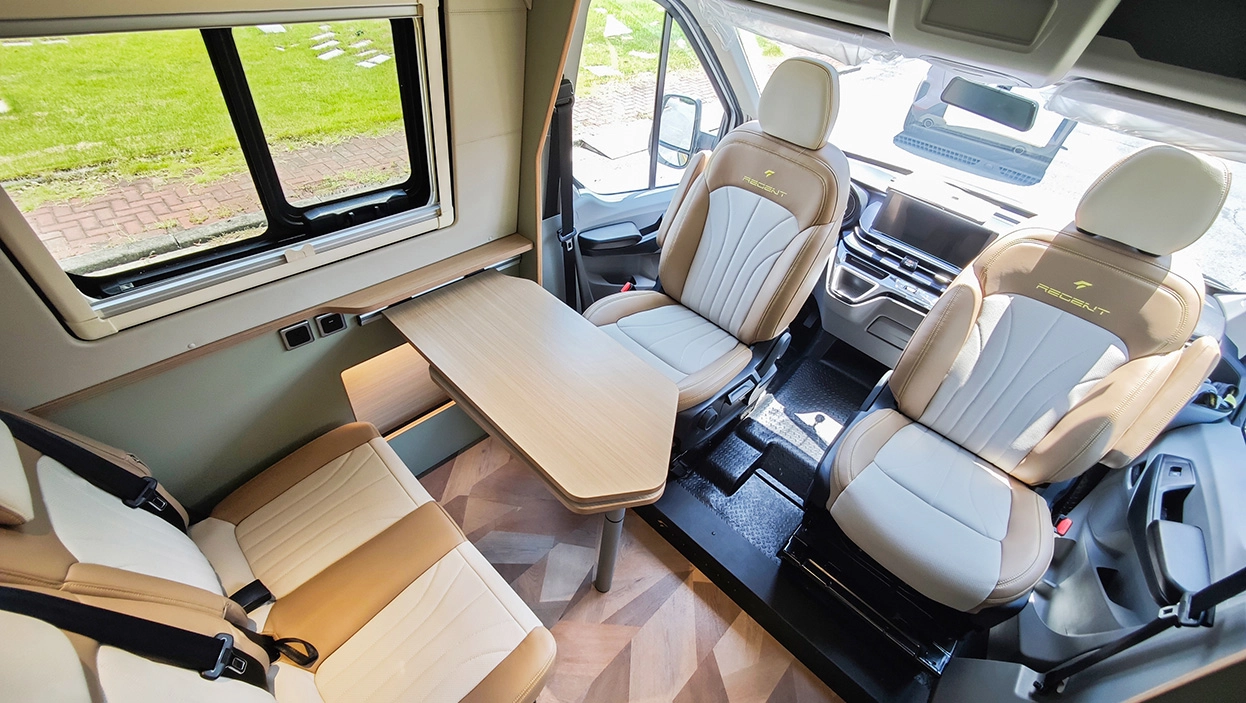
The central appeal of a Class B camping van is that its space matches the people using it. Built on a standard van body, it fits a bed, a compact kitchen, and storage into a footprint that suits one or two travelers comfortably. Nothing is wasted on extra berths or oversized living areas that would sit unused on most trips.
That efficiency has practical side effects. A smaller interior is quicker to tidy, easier to heat or cool, and simpler to keep organized, which matters when the vehicle is also your home for days or weeks at a time. Because every element has to earn its place, good Class B layouts tend to be thoughtful: seating that converts into a bed, storage tucked under surfaces, and a kitchen that folds into the background when it is not in use. For a solo traveler or a couple, this sense of everything being within reach is a feature, not a limitation.
Size also shapes how a trip feels from behind the wheel. Class B camping vans keep the proportions of a large van, so the driving experience is far closer to a familiar vehicle than to a bulky motorhome. This lowers the barrier for first-time owners and for travelers who may be nervous about handling a big rig.
The same compactness widens where the vehicle can go. City parking, narrow streets, mountain roads, and busy scenic stops are all more accessible, and spontaneous plans become far easier to carry out. A solo traveler who decides to extend a trip by a day, or a couple who spots an appealing side road, does not need to worry whether the vehicle will fit. For travelers who prize flexibility, this freedom of movement is often as valuable as anything inside the cabin.
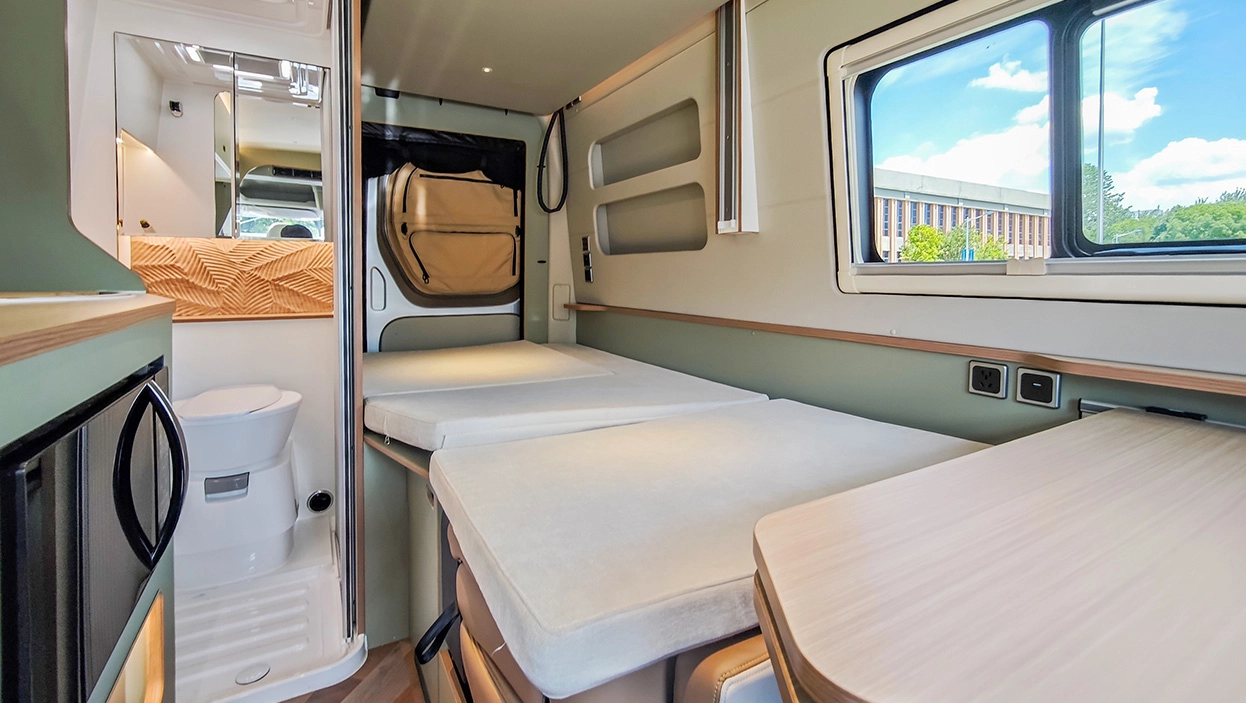
Practical economics add to the case. Smaller, lighter vehicles generally consume less fuel, and costs such as maintenance and insurance tend to scale with vehicle size, so running a Class B van is typically less demanding than running a larger motorhome. The systems on board are also usually more streamlined, which reduces the day-to-day burden of upkeep.
There is a matching logic in how the vehicle is used. When only one or two people travel, paying for and maintaining capacity that never gets used is hard to justify. A compact van keeps the investment aligned with real usage, which makes ownership feel proportionate rather than excessive. For rental operators, the same principle applies: easier handling and lower running costs make these vehicles approachable for customers who are new to camping travel.
It is tempting to treat solo travelers and couples as a single group, but their priorities often differ. A solo traveler, especially one who works on the road, may value a workspace, generous storage for gear, and a layout that keeps everything accessible from one position. A couple is more likely to prioritize a comfortable bed, a functional shared kitchen, and room to move around each other without constant friction.
These differences show up in details such as bed configuration, seating arrangement, and how storage is distributed. A single fixed layout cannot serve both well, which is why flexibility in interior design matters so much in this category.
The strength of the Class B camping van is its ability to deliver a complete travel experience in a small, manageable package. Realizing that strength depends on getting the layout right for the specific travelers a vehicle is meant to serve.
At New GoNow, we work with dealers, rental operators, and business partners to shape camping van layouts around how their customers actually travel, whether that means a workspace-oriented design for solo travelers or a comfort-focused configuration for couples. If you are looking to serve this growing segment, we would welcome the conversation.


